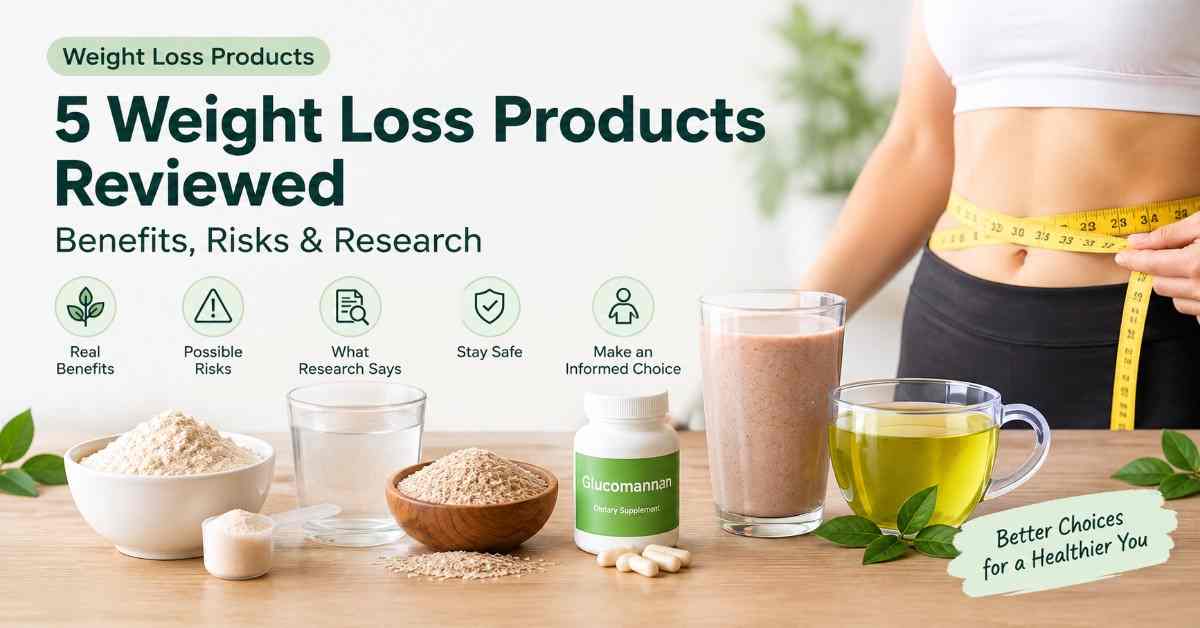
Weight loss products are everywhere today. You can find capsules, powders, teas, fiber supplements, protein shakes, meal replacements, and “fat burners” online and in stores.
The problem is that it can be difficult to know what is actually useful and what is simply marketing.
Some products may have a practical role in a healthy weight-management plan. Others have limited evidence. Some may do very little for body weight, while certain products sold for rapid weight loss can create serious safety concerns.
That is why it is important to look beyond advertising claims.
A product being labeled “natural,” “herbal,” “detox,” or “fat burning” does not automatically mean it is safe or effective. The National Center for Complementary and Integrative Health (NCCIH) says that most dietary supplements marketed for rapid weight loss have not been proven safe or effective, and some weight-loss products have been found to contain hidden ingredients.
This article looks at five commonly used weight-loss-related products:
- Psyllium husk fiber
- Glucomannan fiber
- Protein powder
- Meal replacement shakes
- Green tea
The purpose is not to tell you what product to buy.
Instead, the goal is to explain what these products can realistically do, what they cannot do, common problems users may experience, and what you should know before using them.
Quick Comparison
| Product | Main Purpose | Possible Role in Weight Management | Important Limitation |
|---|---|---|---|
| Psyllium Husk | Adds soluble fiber | May help improve fiber intake and fullness | Not a fat burner |
| Glucomannan | Adds a water-absorbing fiber | May increase fullness in some people | Evidence for weight loss is mixed |
| Protein Powder | Convenient protein source | Can help meet protein needs and make meals more filling | Still contains calories |
| Meal Replacement Shake | Convenient controlled meal | Can make calorie control easier | Not a complete replacement for a varied diet |
| Green Tea | Low-calorie beverage containing caffeine and catechins | May have a small effect in some research | Not a reliable rapid weight-loss method |
The most important point is simple:
None of these products should be treated as a magic solution for losing body fat.
Healthy eating, appropriate calorie intake, regular physical activity, and habits that can be maintained over time remain the foundation of weight management.
1. Psyllium Husk Fiber
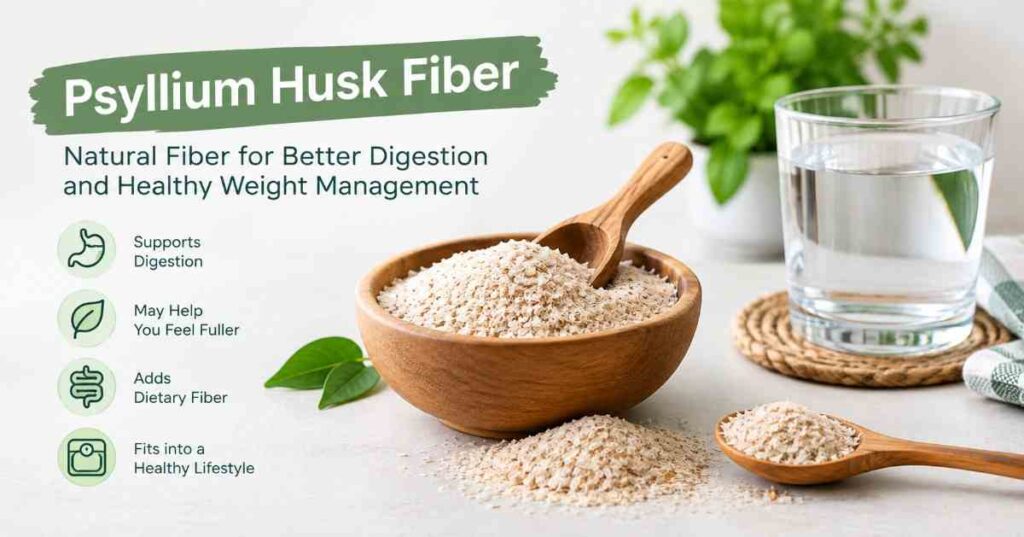
Psyllium husk is a type of soluble dietary fiber.
It is commonly used to increase fiber intake and support bowel regularity. Because it absorbs water and forms a gel-like material, it can also make a meal feel more filling.
This is why psyllium is sometimes included in weight-management plans.
However, there is an important difference between supporting a healthy diet and directly causing fat loss.
Psyllium should not be described as a fat-burning supplement.
How Psyllium May Help
One of the biggest challenges during weight loss is hunger.
Someone may reduce their food intake but find themselves hungry again soon after eating. A diet that contains adequate fiber and protein may be more satisfying than a diet based mainly on highly refined foods.
Psyllium can be one way to increase fiber intake.
However, food should normally be the first source of fiber.
Good sources include:
- Vegetables
- Fruits
- Beans
- Lentils
- Whole grains
- Nuts
- Seeds
A fiber supplement can be useful when someone has difficulty getting enough fiber through food.
A Common Problem: Hunger Between Meals
Imagine someone eats a breakfast containing mostly refined carbohydrates and very little protein or fiber.
They may feel hungry again relatively quickly.
The answer is not necessarily a weight-loss supplement.
A better first step is to improve the meal itself.
For example, a more balanced meal may include:
- A protein source
- A high-fiber carbohydrate
- Fruit or vegetables
- An appropriate amount of healthy fat
Psyllium can potentially support the fiber component, but it does not replace a balanced meal.
Common Problems With Psyllium
Some people may experience:
- Gas
- Bloating
- Abdominal discomfort
- Changes in bowel movements
It is also important to take fiber products with enough liquid and follow the product directions.
People who take medications should speak with a healthcare professional or pharmacist because fiber supplements can affect the absorption of some medicines.
Who Should Be Careful?
Anyone with swallowing difficulties, certain digestive problems, or regular medication use should ask a healthcare professional before starting a fiber supplement.
Do not assume that a product is automatically safe just because it is sold as a natural fiber.
Honest Review
Psyllium can be useful when the actual problem is low fiber intake.
It may also help some people feel fuller.
But it should not be sold as a product that directly melts belly fat.
What Psyllium Can Do
- Increase fiber intake
- Support normal bowel function
- Potentially improve fullness
- Fit into a healthy eating plan
What It Cannot Do
- Guarantee weight loss
- Specifically target belly fat
- Replace a healthy diet
- Cancel out overeating
Bottom line: Psyllium is better understood as a fiber supplement than as a weight-loss product.
2. Glucomannan Fiber
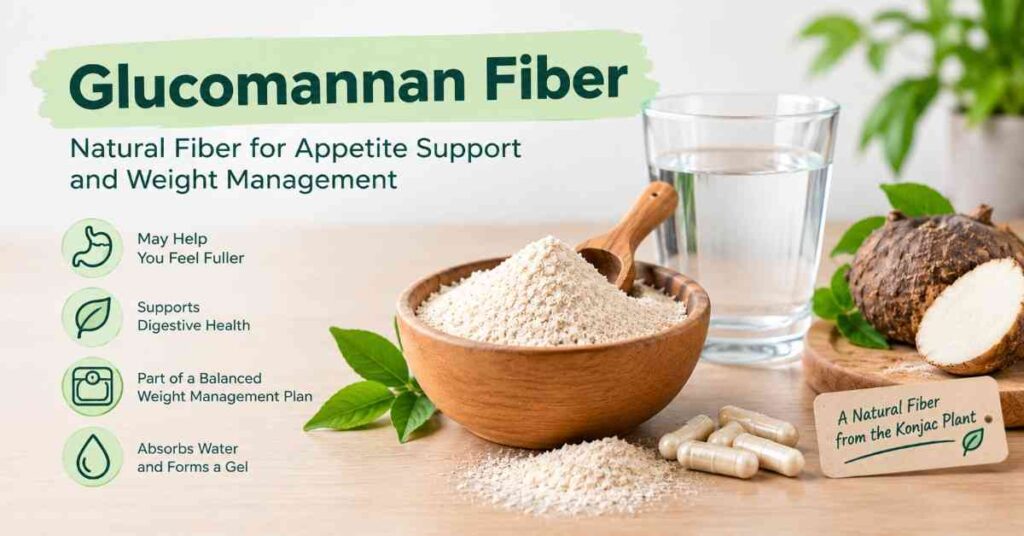
Glucomannan is another type of dietary fiber.
It is derived from the konjac plant and absorbs water, which causes it to expand.
Because of this, glucomannan has been studied as a possible appetite-control and weight-management ingredient.
At first glance, the idea seems reasonable.
If a product increases fullness, perhaps a person will eat less.
But real-world evidence is more complicated.
Does Glucomannan Cause Weight Loss?
Research on glucomannan and body weight has produced mixed results.
The important point is that you should not assume that a fiber that expands in the stomach automatically produces meaningful weight loss.
NCCIH and NIH information emphasize that many dietary supplements marketed for weight loss have limited evidence, and the results for individual ingredients can vary.
Therefore, glucomannan should not be presented as a guaranteed weight-loss solution.
Why Do People Use It?
The main reason is fullness.
Some people have difficulty controlling portions because they feel hungry soon after eating.
A fiber-containing product may help some people feel more satisfied.
But hunger can have many causes.
For example:
- Meals may contain too little protein
- Fiber intake may be low
- Sleep may be poor
- The diet may be too restrictive
- Stress may affect eating
- Meals may be irregular
- Highly processed foods may make portion control difficult
A supplement cannot solve all of these issues.
Common Side Effects
Glucomannan may cause:
- Gas
- Bloating
- Diarrhea
- Constipation
- Abdominal discomfort
There are also safety considerations around swallowing and certain formulations.
For this reason, people should follow the product’s directions carefully and ask a healthcare professional if they have swallowing problems or take regular medication.
Is Glucomannan Worth Considering?
That depends on why you are considering it.
If you think it will make body fat disappear, the answer is no.
If you are looking at it as one possible way to increase fiber intake and support fullness, the situation is different.
It should still be viewed as a small part of a much bigger plan.
Honest Review
Potential benefit: Fiber and fullness.
Main limitation: It should not be expected to produce dramatic weight loss.
Main concern: Digestive side effects and formulation-specific safety issues.
Best way to think about it: A fiber product, not a magic fat burner.
3. Protein Powder
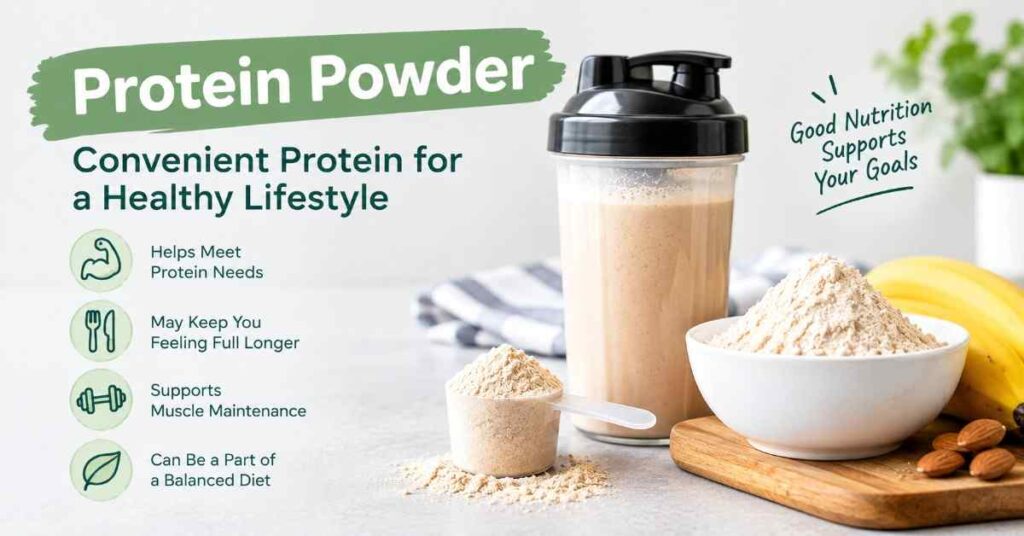
Protein powder is one of the most practical products on this list.
However, it is important to understand that protein powder is not actually a weight-loss medicine.
It is simply a convenient source of protein.
So why does it appear in a weight-management article?
Because protein can be an important part of a balanced diet, and a protein powder can make it easier for some people to meet their protein needs.
Why Protein Matters
When people lose weight, they are usually trying to reduce excess body fat while maintaining as much lean tissue as reasonably possible.
Protein is important for maintaining and repairing muscle.
Protein-rich foods can also help make meals more satisfying.
NIDDK includes foods such as lean meats, poultry, eggs, seafood, beans, peas, lentils, nuts, seeds, and soy products among protein sources that can fit into a healthy eating pattern.
Protein powder simply provides another convenient option.
A Common User Problem
A person may say:
“I am trying to lose weight, but I am hungry all the time.”
Instead of immediately buying a fat burner, it can be useful to look at the meals first.
For example, if breakfast contains very little protein, adding a protein-rich food may make it more satisfying.
A protein shake can sometimes be convenient when whole-food protein is difficult to prepare.
Protein Powder Does Not Automatically Cause Weight Loss
This is one of the most important points in this article.
A protein shake contains calories.
If you drink a shake in addition to your normal meals and snacks, you may increase your total calorie intake.
That can work against your goal.
On the other hand, if a protein shake replaces a higher-calorie snack and helps you maintain a balanced diet, it may be useful.
The context matters.
What to Check on a Protein Powder Label
Before using a protein powder, look at:
Protein
How much protein is actually present per serving?
Calories
A product can contain significantly more calories than expected.
Added Sugar
Some flavored powders contain added sugar.
Serving Size
Always compare products using the actual serving size.
Ingredients
Look for ingredients that you know you tolerate.
Allergens
Milk, soy and other ingredients can cause problems for people with allergies or intolerances.
Common Problems
Some people experience:
- Bloating
- Gas
- Digestive discomfort
- Problems with lactose in some dairy-based products
- Unwanted calorie intake
The right choice depends on the individual’s diet and tolerance.
Honest Review
Protein powder can be useful for convenience.
It can help someone who struggles to get enough protein through regular food.
But it should never be described as a product that automatically burns fat.
Bottom line: Protein powder can support a good weight-management diet, but the overall diet still matters much more than the powder itself.
4. Meal Replacement Shakes
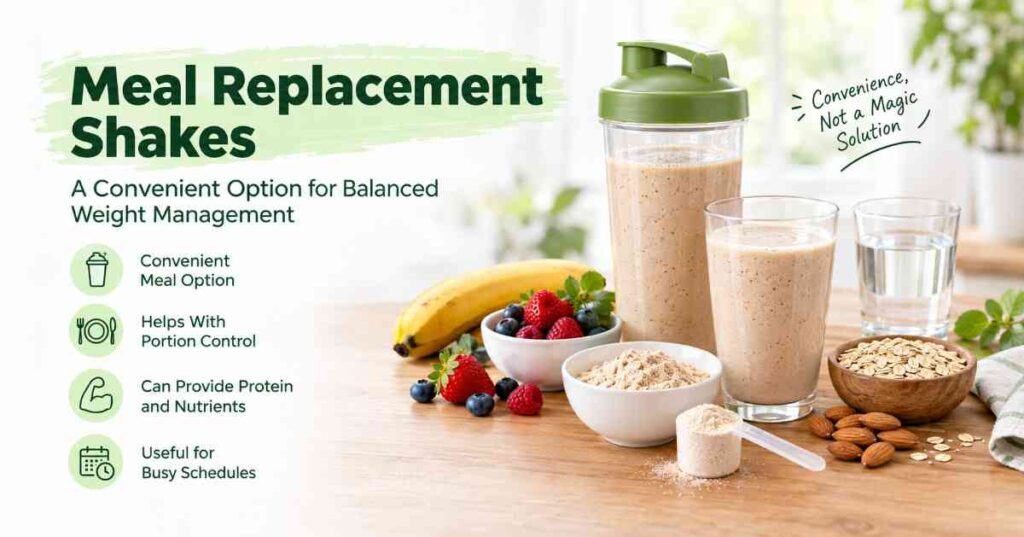
Meal replacement shakes are designed to provide a controlled amount of calories and nutrients in a convenient form.
They are different from ordinary protein shakes.
A protein shake primarily focuses on protein.
A properly formulated meal replacement is intended to provide a broader nutritional profile.
Why People Use Meal Replacements
The biggest advantage is convenience.
Consider someone who works long hours.
They may skip lunch, become extremely hungry, and then eat a very large meal later.
Another person may frequently rely on fast food because they have little time to prepare meals.
For some people, a properly formulated meal replacement can make calorie control easier.
The Main Problem: Liquid Food May Not Be Filling for Everyone
Not everyone finds a shake satisfying.
Some people drink a shake and feel hungry shortly afterward.
If that happens, simply adding another snack may remove the intended calorie benefit.
This is why meal replacements should be treated as a tool, not a requirement.
What to Check Before Using One
Look at:
- Calories
- Protein
- Fiber
- Added sugar
- Saturated fat
- Sodium
- Vitamins and minerals
- Serving size
- Ingredient list
Do not choose a product simply because the package says:
- Slim
- Diet
- Lean
- Burn
- Detox
- Fat loss
Marketing language does not prove effectiveness.
Can Meal Replacements Help With Weight Management?
They can be useful for some people when they make it easier to control calorie intake and maintain a consistent eating routine.
But sustainable weight management still requires an overall eating pattern that a person can maintain.
NIDDK recommends choosing a healthy eating plan that can be maintained over time, along with regular physical activity.
Common Problems
Problem 1: Hunger
A shake may not feel like enough food.
Problem 2: Boredom
Using the same shake repeatedly may make the diet difficult to maintain.
Problem 3: Extra Eating
Someone may drink a meal replacement and then eat a full meal anyway.
Problem 4: Poor Overall Diet
Replacing one meal does not make the rest of the diet healthy.
Honest Review
Meal replacement shakes can be useful when the main problem is convenience and portion control.
They are not necessary for everyone.
And they should not be treated as a permanent replacement for a varied diet.
5. Green Tea
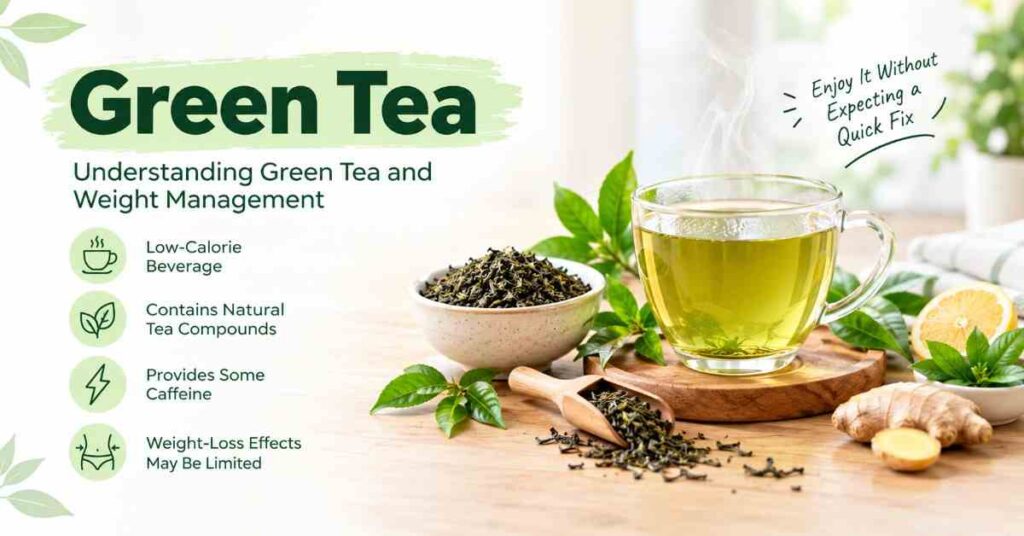
Green tea is probably one of the most commonly discussed natural products in the weight-loss space.
It contains caffeine and compounds called catechins.
Because caffeine can temporarily increase alertness and energy expenditure, and because green tea compounds have been studied for effects on metabolism, researchers have investigated whether green tea can help with body weight.
The results do not support the dramatic claims often seen in advertisements.
Can Green Tea Help With Weight Loss?
Some research has found small effects, while broader reviews have not found a meaningful enough effect to treat green tea as a reliable weight-loss solution.
NCCIH specifically warns consumers to be cautious about claims surrounding green tea supplements and says scientific evidence does not support green tea supplements as a meaningful weight-loss solution.
This does not mean that drinking green tea is bad.
It simply means you should have realistic expectations.
Green Tea Drink vs Green Tea Extract
This distinction is extremely important.
Drinking a cup of unsweetened green tea is not the same thing as taking a concentrated green tea extract supplement.
A normal cup of tea is simply a beverage.
Concentrated extracts can provide much higher amounts of certain compounds.
Some concentrated green tea extracts have been associated with side effects, and safety concerns are greater than with ordinary tea.
Therefore, consumers should not assume:
“Green tea is natural, so concentrated green tea extract must be completely safe.”
That assumption is not correct.
Common User Problem: Expecting a Fat Burner
Someone may start drinking green tea and expect their belly fat to disappear.
That is unrealistic.
Green tea is not a replacement for:
- Appropriate calorie intake
- Healthy food choices
- Regular physical activity
- Adequate sleep
- Long-term consistency
If you enjoy green tea, drinking it without large amounts of added sugar can be a reasonable beverage choice.
But there is no reason to expect dramatic weight loss from it.
Honest Review
Potential benefit: Low-calorie beverage and a source of caffeine and tea compounds.
Weight-loss effect: Any effect is likely to be small rather than dramatic.
Important concern: Concentrated extracts are different from ordinary tea and may have additional safety concerns.
Bottom line: Enjoy green tea if you like it, but do not treat it as a powerful fat burner.
What These Products Have in Common
Although these five products are very different, they share one important limitation:
None of them can replace a sustainable weight-management plan.
A healthy weight-management plan generally focuses on:
- Appropriate calorie intake
- Nutritious foods
- Adequate protein
- Fiber-rich foods
- Regular physical activity
- Adequate sleep
- Sustainable habits
- Monitoring progress
NIDDK recommends a healthy eating plan that includes vegetables, whole fruits, whole grains and appropriate protein sources, along with regular physical activity.
Common Problems People Face During Weight Loss
Understanding these problems can be more useful than simply buying a supplement.
1. Constant Hunger
If you are hungry all the time, look at your meals.
Are you getting enough protein?
Are you eating enough fiber?
Are you drinking enough water?
Are you restricting food too aggressively?
A very restrictive diet can be difficult to maintain.
2. Eating Too Many Processed Foods
Highly processed foods can make portion control difficult for some people.
Try building more meals around:
- Vegetables
- Fruits
- Whole grains
- Protein-rich foods
- Beans and lentils
- Nuts and seeds
3. Drinking Too Many Calories
Sugary drinks, sweetened coffee, energy drinks, juices and alcohol can contribute significant calories.
Sometimes changing beverages is a simple way to reduce calorie intake.
4. Not Moving Enough
Physical activity can help with weight management and provides health benefits beyond weight loss.
NIDDK recommends that healthy adults work toward at least 150 minutes of moderate-intensity aerobic activity per week, plus muscle-strengthening activities on at least two days per week.
People who are currently inactive can start gradually.
5. Trying to Lose Weight Too Quickly
Rapid weight-loss promises are one of the biggest warning signs in the supplement market.
NCCIH recommends being cautious about products that promise quick, dramatic or guaranteed results.
6. Giving Up Too Early
Weight can fluctuate from day to day.
A single weigh-in does not tell the whole story.
Long-term trends are more useful than focusing on one day’s number.
Why “Natural” Does Not Always Mean Safe
This is an important point for anyone considering weight-loss supplements.
The word natural is often used as a marketing advantage.
But natural substances can have side effects.
They can interact with medications.
And supplements can sometimes contain ingredients that are not listed on the label.
NCCIH notes that dietary supplements can have drug interactions and that contamination with hidden ingredients is a particular concern for products marketed for weight loss.
So instead of asking only:
“Is this product natural?”
Ask:
“What exactly is in it, what evidence supports it, and is it safe for me?”
Hidden Ingredients in Weight-Loss Products
This is one of the biggest reasons consumers should be careful.
The FDA maintains a list of weight-loss products that have been found to contain hidden ingredients.
The FDA also states that its notification list represents only a small fraction of contaminated products on the market. Importantly, a product not appearing on the list does not mean that the product has been proven safe.
Recent FDA warnings show that this issue is still active.
For example, in September 2026, FDA testing found undeclared sibutramine in a product called LUZE Fit Intensity that was marketed for weight loss. FDA said sibutramine had been removed from the U.S. market because of safety concerns and can significantly raise blood pressure or heart rate in some people.
In August 2026, FDA also warned about B. MAGI after laboratory testing found undeclared phenolphthalein and compounds associated with yellow oleander.
These warnings do not mean that every weight-loss supplement is contaminated.
They show why consumers should be careful with products making aggressive weight-loss claims.
Warning Signs of a Weight-Loss Product
Think carefully before using a product if its advertising says:
- “Lose weight without diet or exercise”
- “Burn fat while sleeping”
- “Lose 10 kg quickly”
- “Guaranteed results”
- “Permanent weight loss”
- “Melt belly fat”
- “Secret formula”
- “Doctor approved” without verifiable evidence
- “100% safe”
- “No side effects”
- “Detoxes years of toxins”
- “Works for everyone”
NCCIH specifically advises consumers to be skeptical of exaggerated claims and testimonials that are presented as evidence.
How to Check a Weight-Loss Product Before Using It
Before taking any supplement, slow down and check the basics.
Step 1: Read the Complete Label
Look at:
- Ingredients
- Amount per serving
- Serving size
- Caffeine
- Stimulants
- Added sugars
- Allergens
- Warnings
- Manufacturer information
Step 2: Search for Evidence
Do not rely only on social-media videos.
Look for evidence from reputable medical and scientific sources.
Step 3: Check Safety Information
Search for regulatory warnings and known interactions.
The FDA’s weight-loss product notification database is one place to check for current U.S. warnings.
Step 4: Consider Your Own Health
A product that is tolerated by one person may not be appropriate for another.
Consider:
- Current medications
- Existing health conditions
- Allergies
- Pregnancy
- Breastfeeding
- Age
- Other supplements
Step 5: Ask a Healthcare Professional
If you take prescription medication or have a medical condition, ask a doctor or pharmacist before starting a new supplement.
NCCIH recommends discussing weight-loss supplements with a healthcare professional.
What Should You Do If a Weight-Loss Product Causes Problems?
Stop and take the symptoms seriously.
Depending on the product and the symptoms, possible problems may include:
- Severe stomach pain
- Persistent vomiting
- Severe diarrhea
- Racing heartbeat
- Chest pain
- Difficulty breathing
- Severe dizziness
- Allergic reactions
- Other unusual or serious symptoms
For serious symptoms, seek appropriate medical care promptly.
Do not assume that a side effect is normal just because a product is marketed as “herbal.”
Do You Need a Weight-Loss Product at All?
This is probably the most important question.
For many people, the answer may be no.
If your diet already provides adequate protein and fiber, you may not need supplements.
If you can prepare balanced meals, you may not need meal replacements.
If you enjoy green tea, you can drink it as a beverage without expecting it to be a weight-loss treatment.
And if you are trying to lose weight, the most important changes are usually related to your overall eating pattern and physical activity.
NIDDK states that choosing a healthy eating plan that you can maintain over time and staying physically active can help with losing and maintaining weight.
A Simple Weight-Management Approach
Instead of starting with five products, start with five habits.
1. Build Balanced Meals
Try to include:
- Protein
- Vegetables or fruit
- Whole grains or another high-fiber carbohydrate
- Appropriate healthy fats
2. Watch Portions
You do not necessarily have to eliminate your favorite foods.
Portion size matters.
3. Drink More Water and Fewer Sugary Drinks
This can reduce unnecessary calorie intake.
4. Move Regularly
Walking is a simple starting point.
Over time, you can add other aerobic activities and strength exercises.
5. Make Changes You Can Maintain
A plan that you can follow for months is generally more useful than a very restrictive plan that lasts only a few days.
NIDDK emphasizes sustainable eating habits and regular physical activity for long-term weight management.
Product-by-Product Honest Summary
Psyllium Husk
What it is: Soluble fiber.
Potential use: Increasing fiber intake and supporting fullness.
What it is not: A direct fat burner.
Main concern: Digestive symptoms and medication considerations.
Overall message: Useful as a fiber supplement when appropriate, but do not expect dramatic weight loss.
Glucomannan
What it is: A water-absorbing dietary fiber.
Potential use: Fullness and fiber intake.
What it is not: A guaranteed weight-loss product.
Main concern: Digestive problems and formulation-specific safety.
Overall message: Evidence for meaningful weight loss is limited or mixed, so expectations should remain realistic.
Protein Powder
What it is: Convenient protein.
Potential use: Helping meet protein needs and making some meals or snacks more convenient.
What it is not: A fat-burning supplement.
Main concern: Extra calories or digestive intolerance.
Overall message: Useful when it solves a protein or convenience problem.
Meal Replacement Shake
What it is: A convenient, controlled meal option.
Potential use: Making calorie-controlled eating easier.
What it is not: A permanent replacement for a varied healthy diet.
Main concern: Hunger, boredom, and unnecessary extra eating.
Overall message: Can be useful for convenience when used appropriately.
Green Tea
What it is: A tea containing caffeine and naturally occurring compounds such as catechins.
Potential use: Low-calorie beverage.
What it is not: A powerful belly-fat burner.
Main concern: Concentrated extracts can have different safety considerations than ordinary tea.
Overall message: Fine as a beverage for people who enjoy it, but weight-loss expectations should be modest.
Frequently Asked Questions
What is the best weight-loss product?
There is no single product that can honestly be described as the best option for everyone.
Different products serve different purposes.
A fiber supplement may help someone increase fiber intake, while protein powder may help someone meet protein needs.
The right question is not:
“Which product is best?”
It is:
“What problem am I actually trying to solve?”
Do weight-loss supplements really work?
Some ingredients have been studied, but the evidence varies considerably.
NCCIH says most dietary supplements marketed for rapid weight loss have not been proven safe or effective.
That is why it is better to evaluate individual ingredients and evidence rather than trust the overall marketing of a product.
Can a product specifically burn belly fat?
Be cautious with this claim.
A supplement cannot be assumed to specifically target belly fat simply because its label says “belly fat burner.”
Body-fat distribution is affected by many biological and lifestyle factors.
Is protein powder good for weight loss?
Protein powder can be useful as part of a balanced diet.
It can make protein intake more convenient.
But it still contains calories and does not automatically cause weight loss.
Is green tea a fat burner?
Green tea should not be treated as a powerful fat burner.
Evidence does not support the dramatic weight-loss claims often used in marketing.
Is glucomannan safe?
It may be tolerated by many people, but it can cause digestive problems and requires careful use.
People with swallowing problems or those taking medications should seek professional advice before using it.
Can I take several weight-loss supplements together?
Do not assume that combining several products will produce better results.
Multiple products may contain overlapping ingredients, including caffeine or other stimulants.
They can also increase the possibility of side effects or interactions.
If you are considering multiple supplements, discuss them with a healthcare professional.
Are natural weight-loss products safer?
No.
“Natural” does not automatically mean safe.
NCCIH specifically notes that supplements can have interactions and contamination problems, including hidden ingredients in some weight-loss products.
How can I lose weight without supplements?
Focus on the basics:
- Eat a balanced diet
- Manage portions
- Choose nutrient-rich foods
- Get enough protein and fiber
- Reduce unnecessary liquid calories
- Stay physically active
- Sleep adequately
- Make sustainable changes
NIDDK recommends healthy eating and regular physical activity as central parts of weight management.
Final Thoughts
Weight-loss products can look very attractive when you are frustrated with your progress.
A capsule promises convenience.
A tea promises natural fat burning.
A powder promises appetite control.
But real weight management is usually more complicated.
The five products covered in this article have different purposes.
Psyllium is primarily a fiber supplement.
Glucomannan is another fiber that may increase fullness, but its weight-loss evidence is not strong enough to treat it as a miracle solution.
Protein powder can make protein intake more convenient and may fit into a balanced diet.
Meal replacement shakes can help some people manage meals and portions when convenience is a major problem.
Green tea is a low-calorie beverage that has been studied for weight management, but it should not be treated as a powerful fat-burning treatment.
The biggest lesson is that a product should solve a real problem rather than create the expectation of a quick fix.
If your diet is low in fiber, improving fiber intake may make sense.
If you struggle to get enough protein, a protein-rich food or suitable protein powder may be convenient.
If you have no time to prepare lunch, a properly formulated meal replacement may occasionally be useful.
If you enjoy green tea, drink it because you like it—not because you expect it to remove belly fat.
And if a product promises dramatic weight loss without changes to diet or physical activity, be cautious.
NCCIH advises consumers to be skeptical of exaggerated weight-loss claims, and the FDA continues to publish warnings about weight-loss products containing hidden ingredients.
The most reliable approach is still the simple one: build healthier eating habits, stay active, and choose changes that you can realistically maintain over time. NIDDK recommends a sustainable eating pattern and regular physical activity as key parts of weight management.
Important Health Disclaimer
Disclaimer: This article is for general educational and informational purposes only. It is not medical advice, diagnosis, treatment, or a substitute for advice from a qualified healthcare professional.
The information in this article does not guarantee that any product will cause weight loss. Individual responses can vary based on diet, activity level, age, genetics, medications, health conditions and other factors.
Dietary supplements can cause side effects and may interact with prescription or over-the-counter medicines. If you have a medical condition, take medication, are pregnant or breastfeeding, have a history of eating disorders, or are unsure whether a product is appropriate for you, speak with a qualified healthcare professional before using it.
Do not use a dietary supplement as a replacement for medical treatment, a balanced diet, or appropriate physical activity.
Products marketed for weight loss can also contain undeclared or potentially harmful ingredients. The FDA maintains a database of weight-loss product notifications and warns that the database represents only a small fraction of potentially contaminated products. A product not appearing in the database should not be interpreted as proof that it is safe.
Our goal with this article is to provide balanced health information, not to promote or sell any particular weight-loss product.
Sources and Further Reading
- National Institute of Diabetes and Digestive and Kidney Diseases (NIDDK) — Eating & Physical Activity to Lose or Maintain Weight
- NIDDK — Choosing a Safe & Successful Weight-Loss Program
- National Center for Complementary and Integrative Health (NCCIH) — 6 Things To Know About Dietary Supplements Marketed for Weight Loss
- NCCIH — Weight Control
- U.S. Food and Drug Administration (FDA) — Weight Loss Product Notifications
- FDA — Recent warning regarding LUZE Fit Intensity and undeclared sibutramine
- FDA — Recent warning regarding B. MAGI and undeclared ingredients